
I research, edit and publish the articles on the Kreativemedia blog. From 23 October to 22 November 2026 we put 30 articles live, at one article a day. Every price in those posts was checked on the vendor’s official page, or it did not go into the article.
I started BloggersIdeas in 2013. I run AffiliateBooster and SchemaNinja, and through DigiExe I have worked with 1,400+ clients across 28 countries. I am the international bestselling author of Inside A Hustler’s Brain, which has sold 20,000+ copies, and I have spoken at Affiliate Summit, Affiliate World, DMSS and TES. I am the CEO and an investor in Kreativemedia, an AI ad-creative agency for ecommerce and DTC brands. This blog sits next to that work. My name is on every post, so a wrong price or a fake test score would be my problem, not a small typo in the footer.
Why I put my name on this blog
Kreativemedia works with ecommerce and DTC brands on AI ad creative. The blog is where I explain the tools, pricing and commercial-rights questions those teams run into. Readers who compare AI video generators, UGC platforms or product-photography software are about to spend money. If we publish a plan price copied from an old roundup, they can make a bad call.
I have published in this industry since 2013. Trust takes a long time to earn. One careless article can spend it. I would rather leave a number out than invent one so a paragraph looks finished. That habit is older than this blog. It is why I still open a vendor’s own pricing page before I let a dollar figure stand.
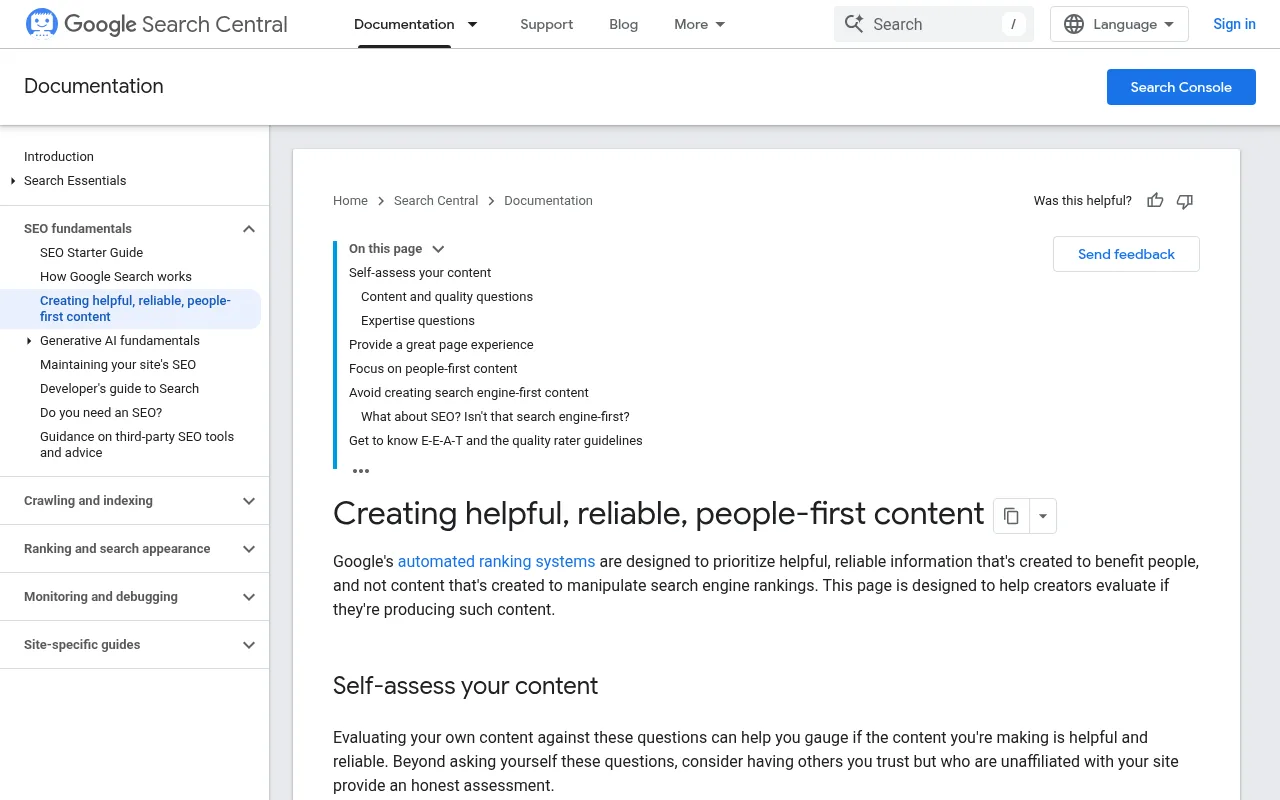
Google’s guidance on creating helpful, reliable, people-first content asks creators to write for people, show who is behind the work, and avoid pages that exist only to rank. It also discusses E-E-A-T: experience, expertise, authoritativeness and trust. Trust is the part I will not trade away. You can see how we apply that on our editorial policy and about page.
The rules I will not bend
These are the standards I hold myself to here. They are not a slogan at the bottom of the page.
- Prices come from the vendor’s official pricing page or help centre on the day an article goes live or is updated. If we cannot confirm a dollar figure, we remove it and link the official page.
- We do not invent test scores, client results, metrics or quotes.
- If a section cannot be filled with a verified fact, I cut the section rather than pad it.
We also do not publish income claims, and we do not add a box that says a vendor reviewed the article when they did not. Some posts may use affiliate links when an approved cloaked link exists. That does not change the verification rules above. Sponsored posts, if we ever run them, will be labelled as sponsored.
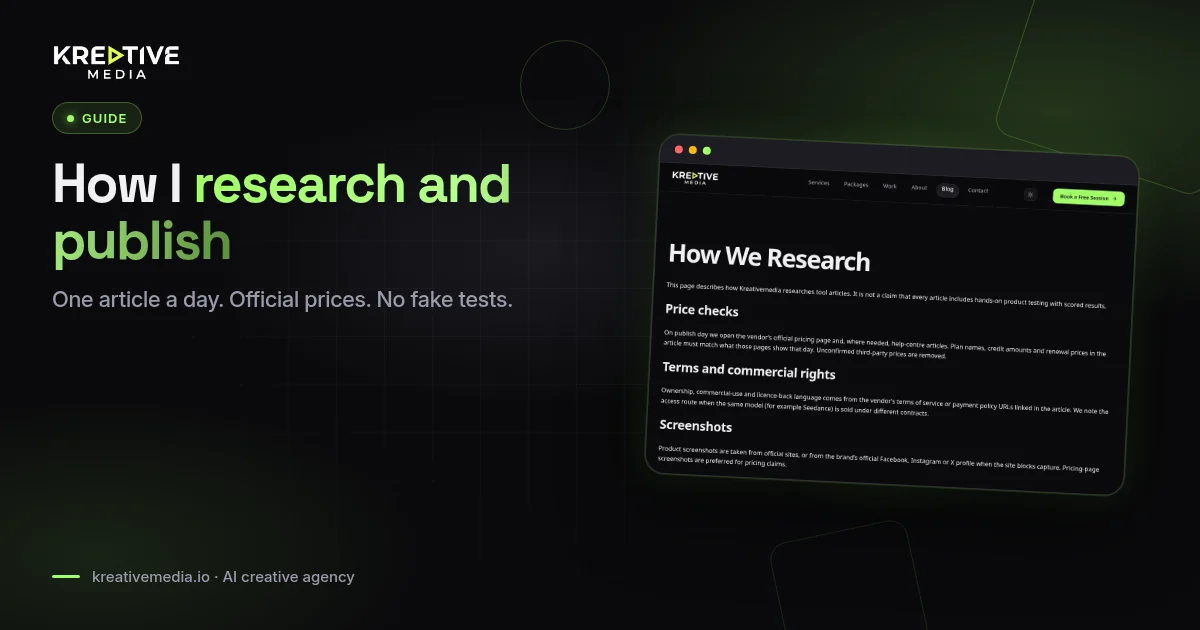
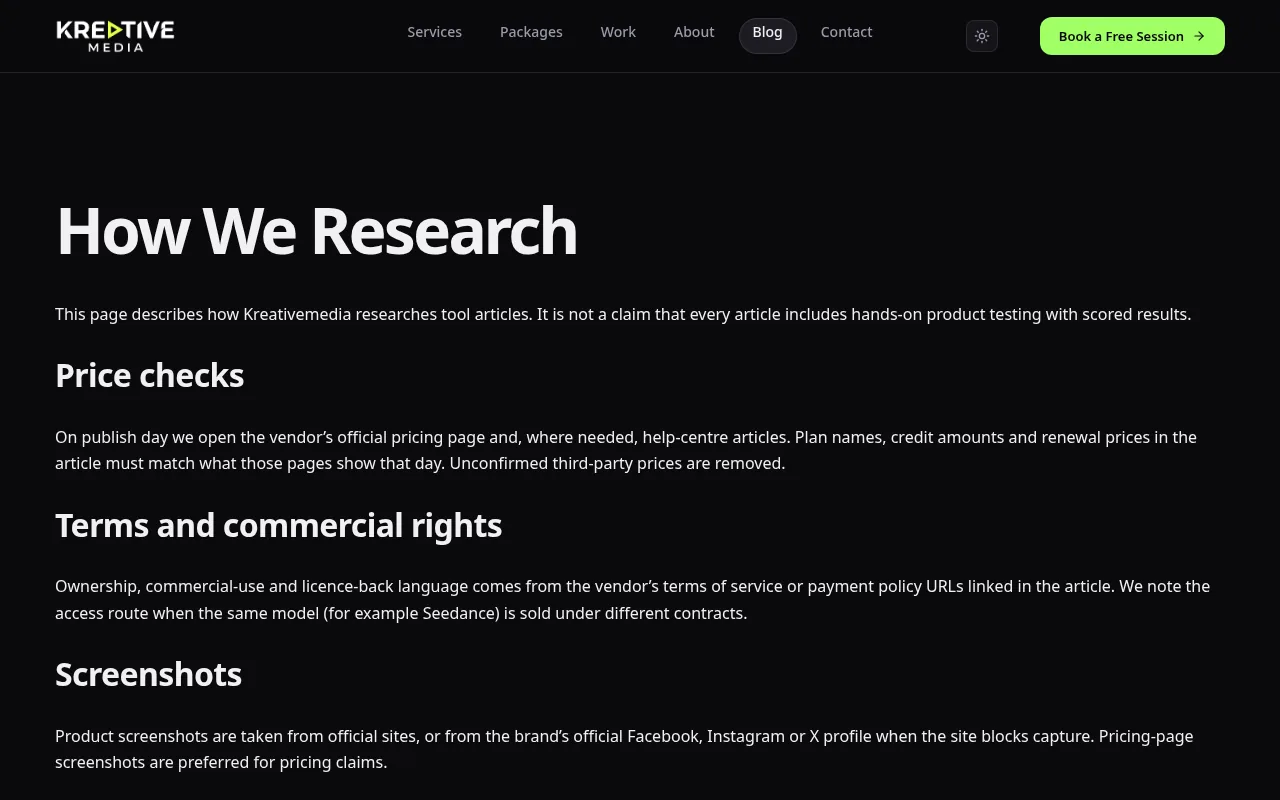
The working version of the research rules lives on our How We Research page, including how we treat commercial-rights language and product screenshots. I wanted those rules in public. Too many tool articles are built on recycled numbers, and I do not want that to be the reputation of this site.
How I research an article
For a tool or pricing article I start with the official site: the pricing page, the help centre, and the terms that cover commercial use. Plan names, credit amounts and renewal prices have to match what those pages show when we publish. Other blogs can help me find a vendor. They are not a source for a dollar figure.
I use research tools, including AI assistants, to collect official URLs or to mark a sentence that feels thin. A helper does not invent a price, a test score or a quote, and it does not decide what goes live. A person on my team, or I, checks the official page and makes that call.
When the same model is sold under more than one contract, we name the access route. That detail matters for commercial rights, and it is easy to blur if you only copy a feature list. Platform ad rules, such as Meta’s or the FTC’s, come from official help or rule pages, not from a summary we cannot trace.
How I edit before a post goes live
Before I publish, I read the draft the way a reader would. Placeholders come out. Claims we cannot support come out. Internal links have to point to a live page on this site. If a dollar price is only visible inside a logged-in app, I leave that figure out and link the official page. Our editorial policy already says the same thing.
I care about the voice as well. I want the article to sound like someone who has spent time with the source material, not like a brochure. A short, honest post is more useful than a long one held up by guesses. If I cannot stand behind a sentence, it does not ship.
One article a day
We publish one article a day on this blog. That pace is a choice. It leaves time for a price check, an edit, and a look at the live page after the post is up. From 23 October to 22 November 2026 that schedule produced 30 articles.
I decide the topics and the order. If a draft is not ready, it stays a draft. I would rather hold a post than publish one with a hole in it. When a vendor later changes pricing or terms, we update the article when we next touch it, or sooner if a reader flags a material error through our contact page.
That is the whole process. I write, I edit, I publish, and I keep the rules in the open so you can check us against them.
FAQs
Who writes and publishes the articles on the Kreativemedia blog?
I do, with my team. I research, edit and publish these articles, and they go out under my name. You can read my background on the about page.
Do you use AI tools when you work on an article?
Sometimes, as helpers for research and checks, such as collecting official URLs or flagging a weak sentence. A person still decides what is accurate and what gets published.
How do you check prices?
On the vendor’s official pricing page or help centre on the day we publish or update. If we cannot confirm a figure, we take it out and link the official page instead.
Why do you publish only one article a day?
So each post gets a real edit, a price check and a review of the live page, rather than a stack of drafts going out at once.
How many articles have you published on this blog?
30 articles went live from 23 October to 22 November 2026, at one article a day.
What will you never put in an article?
Invented test scores, client results, metrics or quotes, and prices we have not confirmed on an official page. If a section cannot be supported, I remove it.
Where can I read your editorial rules in full?
See our editorial policy and How We Research. Both pages are kept in the open so you can check us against our own rules.