
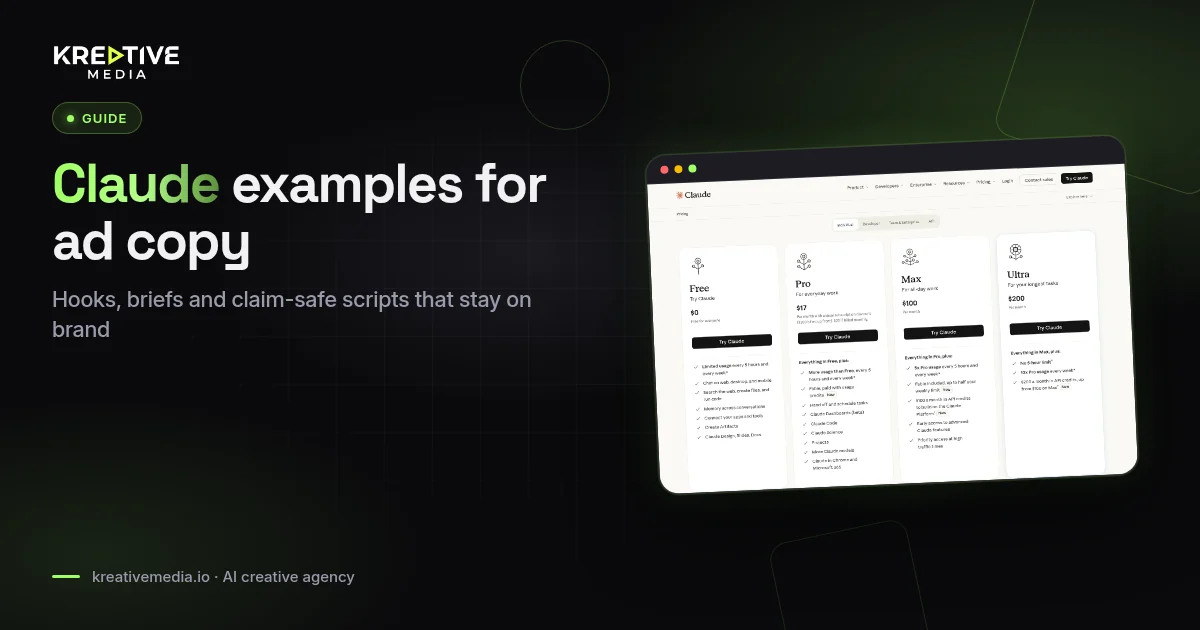
Answer: Claude examples that help marketers are constrained prompt patterns for hooks, primary text, UGC scripts, creative briefs and claim-safe rewrites. Claude is Anthropic’s assistant with Projects, Artifacts and paid plans that raise usage limits. Claude Pro is $20/month (about $17/month on annual billing at $200 upfront). Max is $100/month. Ultra is $200/month. Team Standard seats are $25/member/month ($20 annual). Team Premium seats are $125/member/month ($100 annual). Prices checked on claude.com/pricing on 6 November 2026. The Verge’s September 2026 coverage of Claude Code Projects shows Anthropic pushing multi-agent coordination; marketers can still use classic Projects and Artifacts for copy systems today.
Quick take
- Best for: teams that write many ad variants and keep brand rules in Projects.
- Skip if: you need all-day browser clicking through Ad Library without a computer-use Bot beside Claude.
- Hard rule: ban invented testimonials and unsourced statistics in every Project instruction.

November 2026 product context
Claude remains strong for long constrained writing. Artifacts open editable briefs and tables beside chat. Projects hold brand files. Claude Code relaunches Projects to manage multiple AI agents (The Verge, 17 Sep 2026) reported a Projects relaunch aimed at coordinating multiple Claude Code agents in the cloud. That engineering story matters because it shows where Anthropic is investing. For ad copy work, you still win with clear prompts, proof lists and banned claims, not with hoping a blank chat invents a campaign.
Adobe’s April 2026 CX Enterprise launch (Adobe Newsroom) is useful background on how large creative platforms are racing to ship AI agent suites for marketing. Claude is one option in that wider market. Use it for language. Use render tools for pixels. See AI UGC ads and how much AI video ads cost.
Claude pricing snapshot

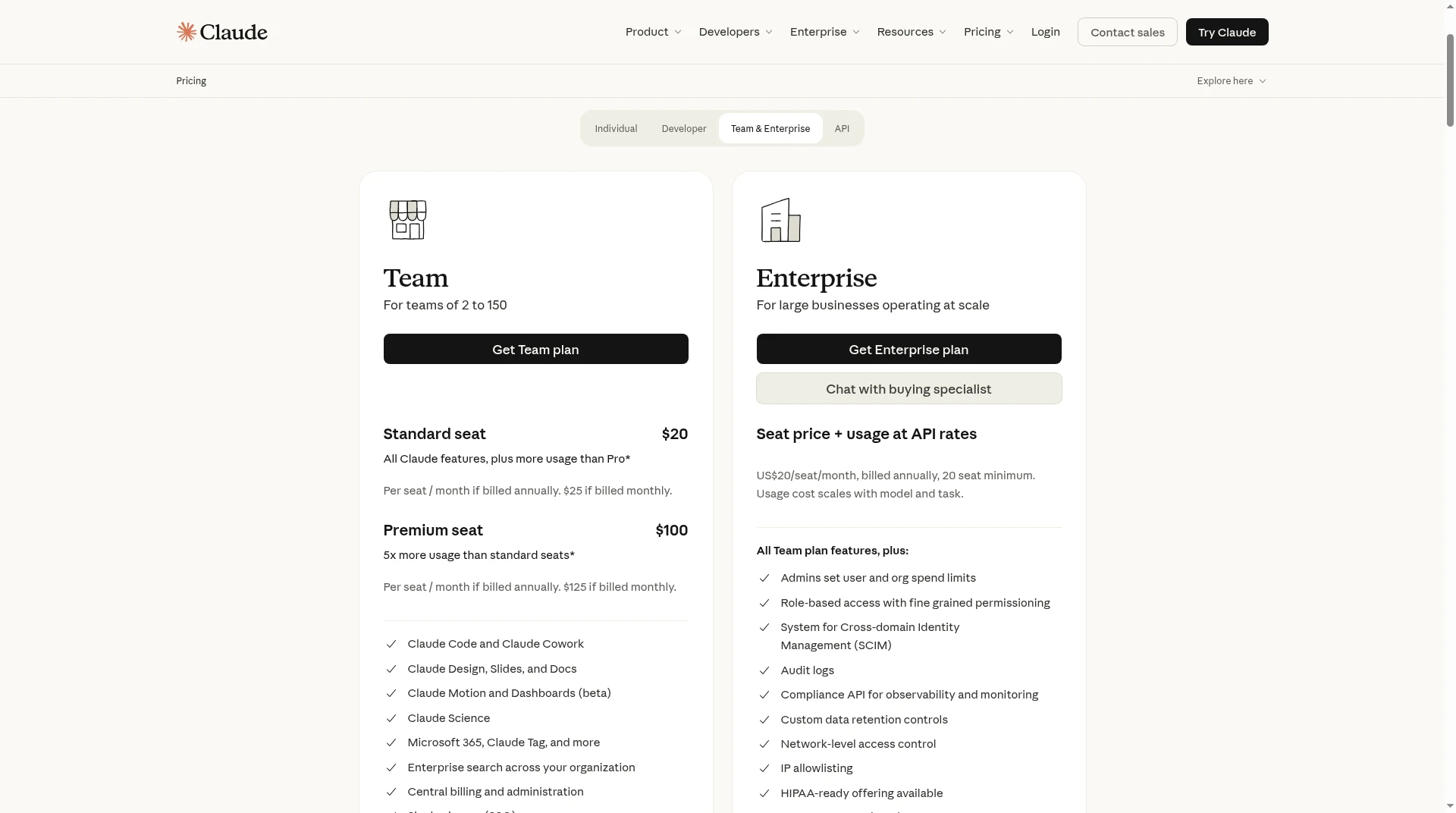
| Plan | US price (6 Nov 2026) | Marketing use |
|---|---|---|
| Free | $0 | Light drafting, Artifacts Docs/Slides/Design, up to 5 Projects |
| Pro | $20/mo or ~$17/mo annual | Daily copy, unlimited Projects, Research, Dashboards beta |
| Max | $100/mo | Heavy launch weeks (5x Pro usage) |
| Ultra | $200/mo | Longest sessions (10x Pro weekly usage; no 5-hour limit on verified accounts) |
| Team Standard | $25/seat/mo ($20 annual) | Shared Projects |
| Team Premium | $125/seat/mo ($100 annual) | Higher seat usage tier |
Confirm on claude.com/pricing and the Team plan help article. Team needs at least two members. Taxes vary by region.
Ten Claude examples for ads
1. Hook ladder
15 hooks under 12 words in problem, curiosity and proof buckets. Reject hooks that need missing proof.
2. Meta primary text set
Five variants around 50, 90 and 125 words. One CTA each. Note AI labelling needs when faces are synthetic, per Meta AI disclosure.
3. Timestamped UGC script
Hook 0-3s, problem 3-8s, demo 8-20s, proof 20-28s, CTA 28-35s. Mark product-on-screen timing before tools in Creatify vs Arcads or Arcads review.
4. Claim-safe rewrite table
Columns: original, risk, safer line, legal review yes/no.
5. Artifact creative brief
Audience, promise, proof, visuals, banned claims, hooks, script, CTA, disclosure, open questions. Success criteria stay operational.
6. Landing page angle mine
Ten angles ranked by on-page proof. Delete angles that invent claims.
7. Competitor tone map
Analyse three transcripts, then write original hooks. Ban copying four-word phrases.
8. Multilingual drafts
From an approved English master, flag idioms for native review.
9. FAQ comment replies
Short answers fit for on-platform comments.
10. Stakeholder revision log
Change log plus clean revised script after editor notes.
Master prompt pattern
Role: performance copywriter for [brand].
Offer: [one sentence].
Audience: [who + job].
Proof we can use: [bullets only].
Banned claims: [list].
Platform + length limits: [Meta/TikTok/YouTube].
Output: [hooks|script|brief|table].
Rules: no invented metrics; mark gaps [PROOF NEEDED]; short sentences; no em dashes.
Hook formulas that stay honest
- Problem naming with a specific friction and timeframe.
- Proof lead that only uses supplied facts.
- Offer clarity with product, audience, outcome and policy.
- Demo first that names a visible action.
- Pattern interrupt that stays claim-safe.
Require three variants per formula and a pointer to the proof bullet.
Projects setup
- One Project per brand or major offer.
- Upload voice samples, offer sheets and legal do-not-say lists.
- Pin no-invented-proof instructions.
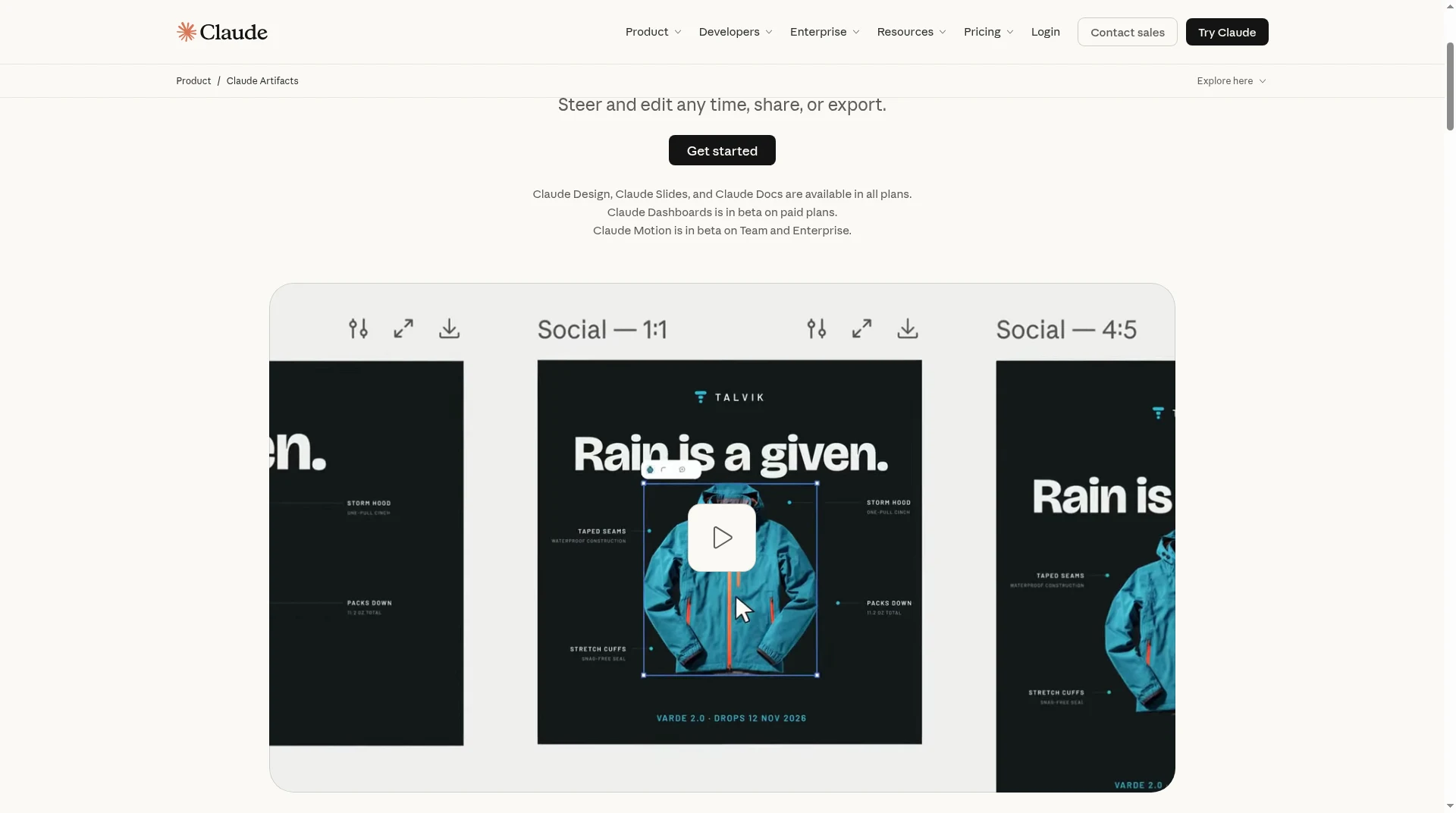
- Store briefs as Artifacts.
- Share on Team plans.
- Archive expired promos.
Brief quality checklist
- One audience.
- One primary promise.
- Proof matches the landing page.
- Banned claims attached.
- Platform limits respected.
- Disclosure flagged for AI actors.
- References are files or URLs.
- Success criteria are delivery metrics.
Failure modes
- Empty superlatives slip in without a ban list.
- Fake specificity such as unsourced percentages.
- Voice drift in long chats. Reset with a sample paragraph.
- Overlong hooks for short video.
- Legal notes buried at the bottom of the prompt.
Team handoff
Strategist collects proof. Claude drafts. Editor cuts claims. Producer renders in the UGC stack. Media buyer tests. Nobody claims a winner without data. Rendering choices can lean on Arcads review, Higgsfield review and Kling vs Seedance.
Illustrative skincare constraints
Inputs only: 50 ml jar, fragrance-free, dry skin, 30-day returns. No clinical study. Claude must refuse “dermatologist proven” until you add a citation. This is a template, not a performance report.
Where Claude falls short for ad ops
It is not a full substitute for computer-use Ad Library collection. It can sound sure while guessing. Pro limits can tighten on huge launch weeks. Artifacts help collaboration; legal sign-off stays human.
Building a reusable Claude prompt library for a creative pod
Most teams save prompts in random chats and lose them. Better practice: keep a living library inside a Claude Project with one Artifact per job type. Name files by job, not by date. Hook ladder, primary text set, UGC script, claim table and brief template should each have an owner. When platform character limits change, update the Artifact once so every strategist inherits the fix.
Run a weekly fifteen-minute cleanup. Delete prompts that produced repeated legal redlines. Promote prompts that needed almost no edits. Add one negative example each week: a bad output with a note explaining why it failed. Claude responds well when it can see what to avoid, not only what to imitate.
For launch weeks, pre-load proof sheets before media asks for volume. The bottleneck is rarely the model. The bottleneck is missing proof and unclear bans. If your category is regulated, keep the legal do-not-say list at the top of the Project instructions every time, even if it feels repetitive. Repetition protects the brand.
When to move a draft out of Claude
Leave Claude when the script is claim-safe, timed and approved by an editor. Production then belongs in specialised UGC or video tools. Trying to force Claude to “make the video” creates fake confidence and no media file. Keep the handoff clean and documented so producers are not reverse-engineering chat history.
Copy desk rules that keep Claude useful past week one
Every draft leaves Claude with a status tag: draft, legal, approved or killed. Approved copy gets filed in the Project. Killed copy gets a one-line reason. Without status tags, teams regenerate the same weak hooks every sprint. Also set a maximum number of regeneration cycles. If a hook family fails twice, change the inputs instead of asking for “more creativity.” Creativity without new proof is usually just louder guessing.
Train editors to reject empty intensifiers before the final CMS pass. The model will mirror whatever samples you feed it. If your samples are clean, outputs stay cleaner. If your samples are hype-filled, no system prompt fully saves you.
Finally, keep a dated changelog of offer updates. When price, bundle or shipping terms change, update the Project the same day. Old offers inside long context windows are a quiet source of wrong ads.
Connecting Claude drafts to live tool guidance
After scripts are approved, producers should re-read current tool realities on AI UGC ads, Arcads review and Meta AI disclosure rather than relying on memory. Rights, credits and disclosure rules shift. Claude will not notice a vendor pricing change unless you ask it to check, and even then a human or computer-use visit to the official page is safer for anything that will be published as fact.
Where Claude fits beside production tools on Kreativemedia
Claude is strong at structured writing. It is not a replacement for AI UGC renderers, talking-head tools or Meta’s creative diagnostics. Keep the handoff clear. Claude produces the brief, hook board and script. Tools covered on this blog render the visual. A media buyer still owns targeting and budget. When those lanes blur, teams either over-trust a language model on visual taste or under-use it on the writing jobs it actually does well.
Build a weekly ritual where approved Claude outputs become training samples for the next week. Only samples that survived legal and brand review go into the Project. That single habit improves consistency more than endlessly rewriting the system prompt. Also keep a short kill list of phrases the brand will never use. Paste the kill list into every Project instruction so the model does not rediscover banned claims.
How to measure the week without inventing vanity KPIs
Start with three numbers that every editor can collect without a BI tool. First is cycle time from brief request to approved research pack. Second is edit rate, meaning how many sentences a human rewrites before publish or shoot. Third is rejection rate, meaning packs thrown away because the angle list was useless. Put those numbers in a shared sheet every Friday. After four weeks you will know whether the agent is saving hours or just relocating the same work into review meetings.
Resist the urge to attach paid media ROAS to a research agent in the first month. Media results depend on offer, creative, audience, season and landing page. An honest ops win can sit beside a flat ROAS without becoming a failure story. When leadership demands a money metric, convert hours saved into loaded hourly cost of the people who used to do the work. That conversion is still an estimate, but it is closer to truth than a fake conversion chart.
Document failure modes in the same sheet. Captcha stops, rate limits, empty search results and hallucinated prices all belong there. Teams that hide failures end up over-automating the next sprint. Teams that list failures end up with better stop rules and clearer human ownership.
News and further watching
Read Claude Code relaunches Projects to manage multiple AI agents (The Verge, 17 Sep 2026) for Anthropic’s multi-agent Projects direction and Adobe’s CX Enterprise announcement (Adobe Newsroom, 20 Apr 2026) for the wider marketing AI suite race. Watch the Anthropic Artifacts and prompting videos embedded above before you build your first Project. Anthropic updates plan matrices through the year, so reopen claude.com/pricing before you republish any price table of your own. The figures in this article were checked on 6 November 2026.
FAQs
What are the best Claude examples for ad copy?
Hook ladders, Meta primary text sets, timestamped UGC scripts, claim-safe tables and Artifact briefs with real proof.
How much is Claude Pro?
$20 per month, or about $17 per month annually at $200 upfront, checked 6 November 2026 on claude.com/pricing. Max is $100/month and Ultra is $200/month.
Do small teams need Team?
Team helps for shared Projects. Solo operators often start on Pro. Team requires at least two members.
Will Claude invent testimonials?
Yes if unconstrained. Ban them in Project instructions.
Claude or a computer-use Bot for competitor ads?
Bot collects the screen. Claude turns cleaned notes into copy.
Are Artifacts on Free?
Anthropic states Docs, Slides and Design Artifacts are available on Free. Dashboards are a paid-plan beta. Confirm on help docs and pricing.
How do I keep Claude on-brand?
Load voice samples and good/bad ad examples. Cap sentence length to match samples.
Can Claude replace UGC tools?
No. It drafts language. Rendering stays in specialised tools.

Jitendra Vaswani is an SEO expert, AI and marketing professional, and the founder behind Kreativemedia. He started BloggersIdeas in 2013, runs AffiliateBooster and SchemaNinja, and through DigiExe has worked with 1,400+ clients across 28 countries. He is the international bestselling author of Inside A Hustler’s Brain (20,000+ copies) and has spoken at Affiliate Summit, Affiliate World, DMSS and TES. Find him at jitendra.co.